The ads are working. The right people, in the right area, are clicking through to your website. But the phone isn’t ringing as often as it should, and the enquiry form sits quiet.
When this happens, most businesses reach for the same fixes: spend more, change the ads, try a new channel. But if the right people are already arriving, the problem isn’t getting them there. It’s what happens after they land.
That’s where conversion rate optimisation comes in: making your website better at turning visits into enquiries. And for big, trust-heavy decisions, it starts with one question: does your website give people a reason to trust you?
In short
- If ads bring the right people but enquiries lag, look at the website before the ads.
- For big decisions, customers choose on quality and reputation, not price.
- Show real people, real work and real reviews, quickly.
- Build assets that keep working after the ad budget stops.
The situation: good traffic, quiet phone
A Christchurch construction business came to us in exactly this position. Its Google Search ads were putting it in front of local people actively looking for a builder. The visitors were relevant. But enquiries didn’t match the quality of the traffic.
A construction project isn’t an impulse buy. It’s a large sum of money, a long project, and a team of people working in or around your home. Nobody chooses a builder the way they choose a takeaway. So before touching the ads, we set out to understand what happens between the click and the enquiry.
How do your customers actually choose?
Rather than guess what matters to homeowners, we went to independent evidence. Each year, BRANZ’s New House Owners’ Satisfaction Survey asks New Zealanders who’ve just built a home what mattered most when they chose their builder.
The answer is consistent from year to year. Quality and reputation come out on top. Finishing on time and certainty on price follow. The lowest price ranks well down the list.
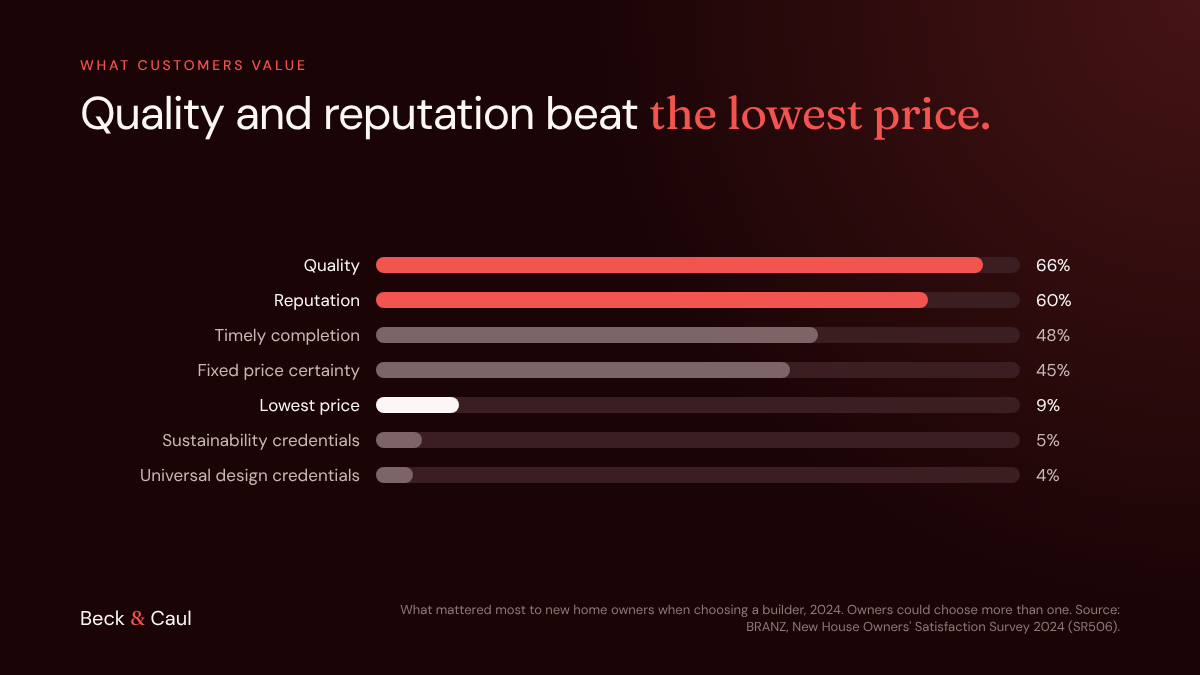
That changes the question. It’s not “how do we get more clicks?” It’s “when someone lands on this website, does it show quality, reputation and people they can trust, straight away?”
Conversion rate optimisation, through a cautious customer’s eyes
Next, we walked through the website the way a careful homeowner would: arriving from an ad, unsure, and looking for reasons to trust or leave. We also looked at how other Christchurch construction businesses present themselves on their websites, in ads and on Google Maps.
Three things stood out.
People want to see who will be on site. The most convincing businesses put real faces forward: the owner, the project lead, the team. Behind-the-scenes photos and short videos do more than polished stock images.
Specific beats general. Many homeowners start with one project, not the whole house. A clear page for each type of job, explaining what’s involved and how the process works, meets them where they are.
Reviews do the heavy lifting. For a big project, a neighbour’s recommendation is gold. Google reviews with photos of finished work are the online version of that, and they show up before someone even reaches the website.
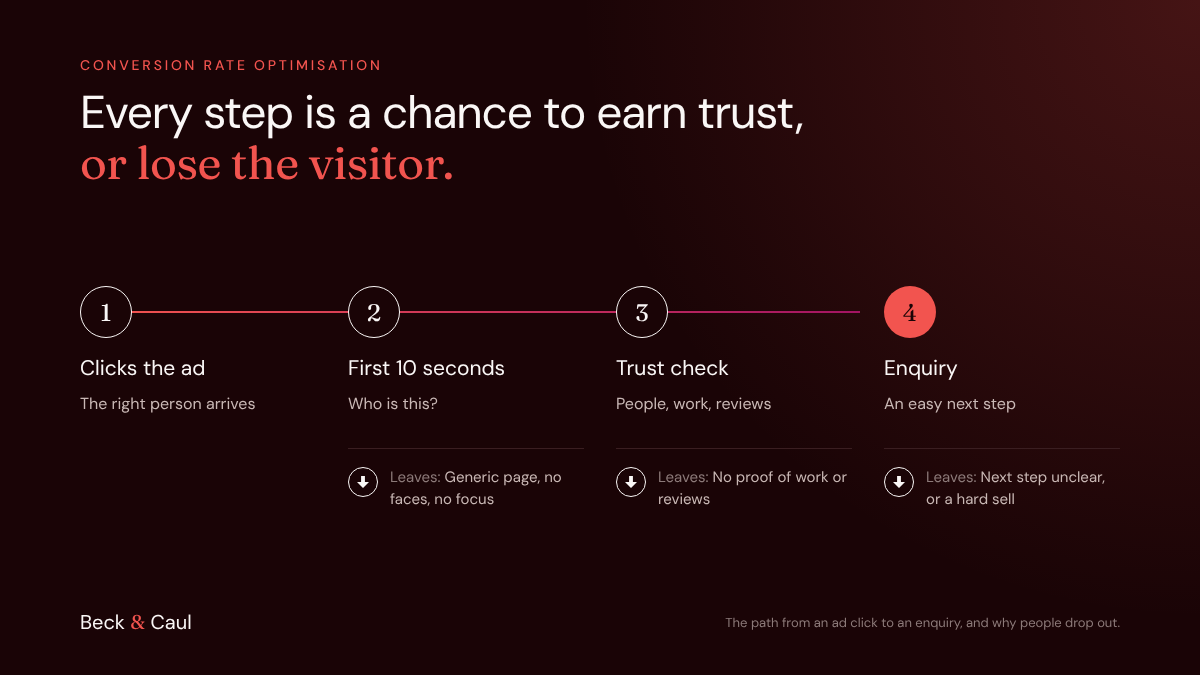
We turned this into a simple test any business can run on its own site.
The 10-second trust test
| What visitors look for | What it looks like on your site | Quick win |
|---|---|---|
| Who you are | Real names and faces on the homepage and About page | A team photo and one line on each person |
| Proof of quality | Real projects, before and after | A gallery of finished work with short captions |
| What others say | Recent Google reviews, shown or linked | Ask happy customers for a review, with a photo |
| The job they have in mind | A page for each main service | One page per project type, with the process explained |
| What happens next | A clear, low-pressure next step | “Book a free consultation” on every page |
What keeps working when the ads stop?
The business was on a relatively new website, so it hadn’t yet built much organic visibility in Google. That made it more dependent on paid ads than it needed to be.
Paid ads give you visibility straight away, and they were doing their job. But they stop the moment the budget stops. Organic visibility takes longer to build, but it keeps working and grows over time. The healthiest position is a mix of both.
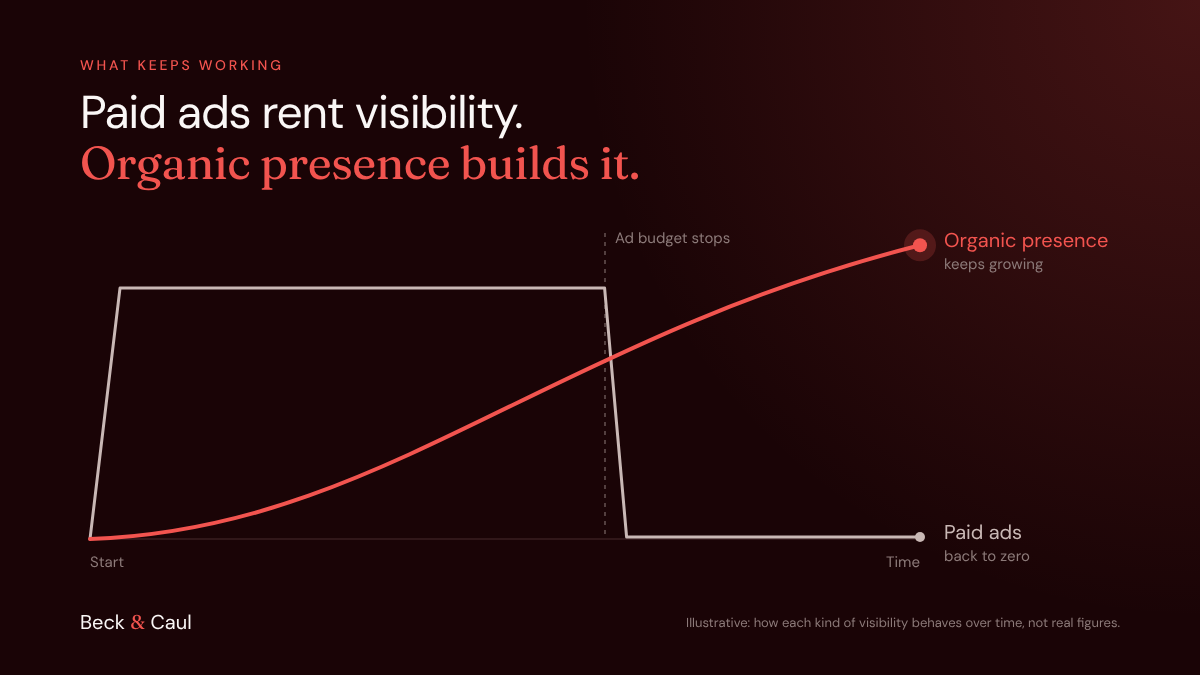
| Paid ads | Organic presence | |
|---|---|---|
| How fast it works | Straight away | Builds over months |
| Cost over time | Ongoing, every click | Mostly upfront effort |
| When the budget stops | Visibility stops too | Keeps working |
| What it builds | Traffic | Traffic plus long-term trust |
| Examples | Google Search ads, Meta ads | Google Business Profile, reviews, service pages, content |
So alongside the ads, we recommended building assets that keep working:
- An actively managed Google Business Profile, with regular photos and replies to every review.
- More website content on specific services and finished projects.
- Short videos of the team that work on the website, on social media and in ads.
There’s one more reason to start now. Google’s AI-generated answers increasingly recommend local businesses by name for searches like “best builders in Christchurch”. The businesses that appear tend to have strong reviews, clear service pages and a visible track record, which are the same assets that win enquiries from humans.
Here’s what that looks like today, for two everyday Christchurch searches:
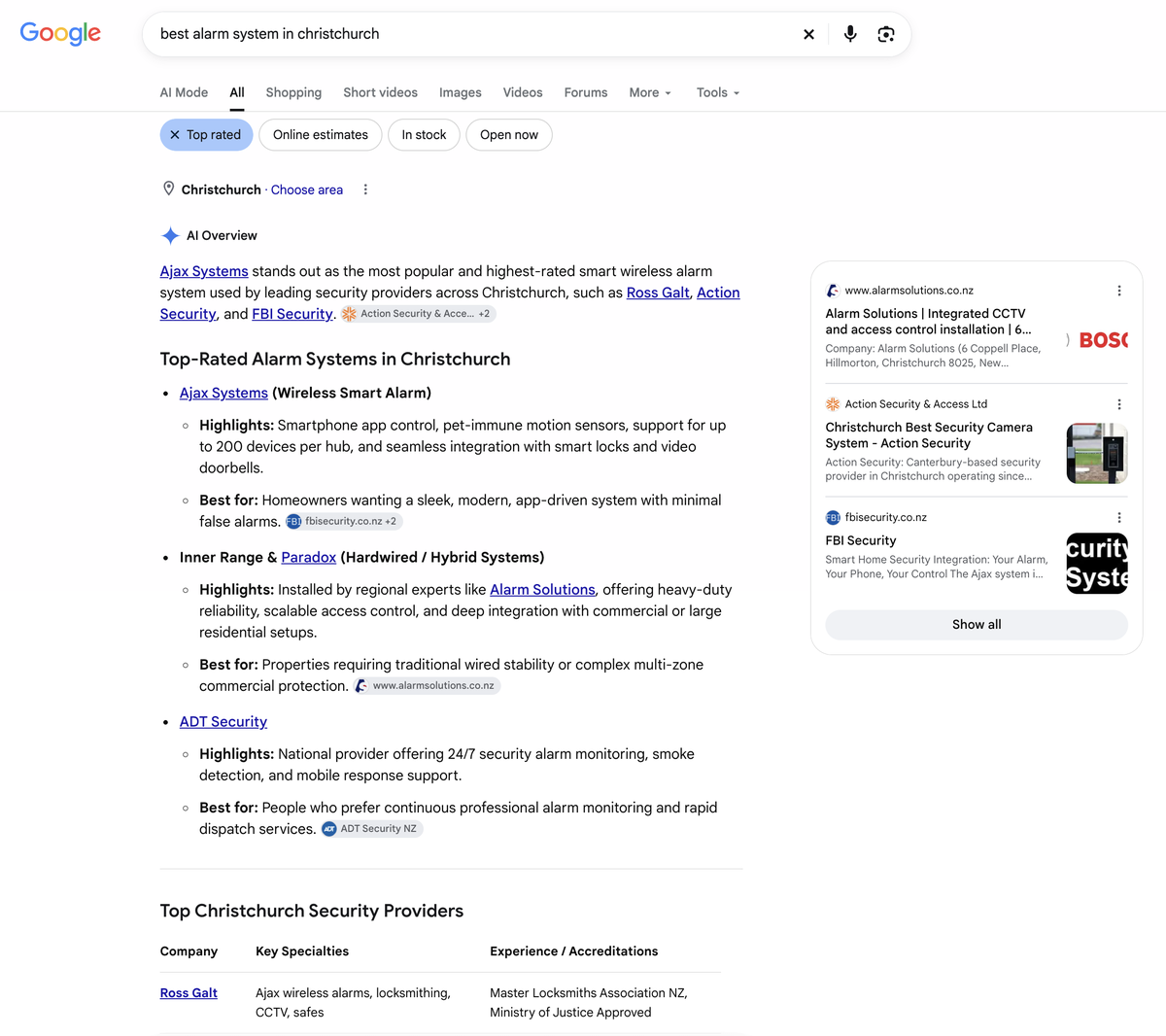
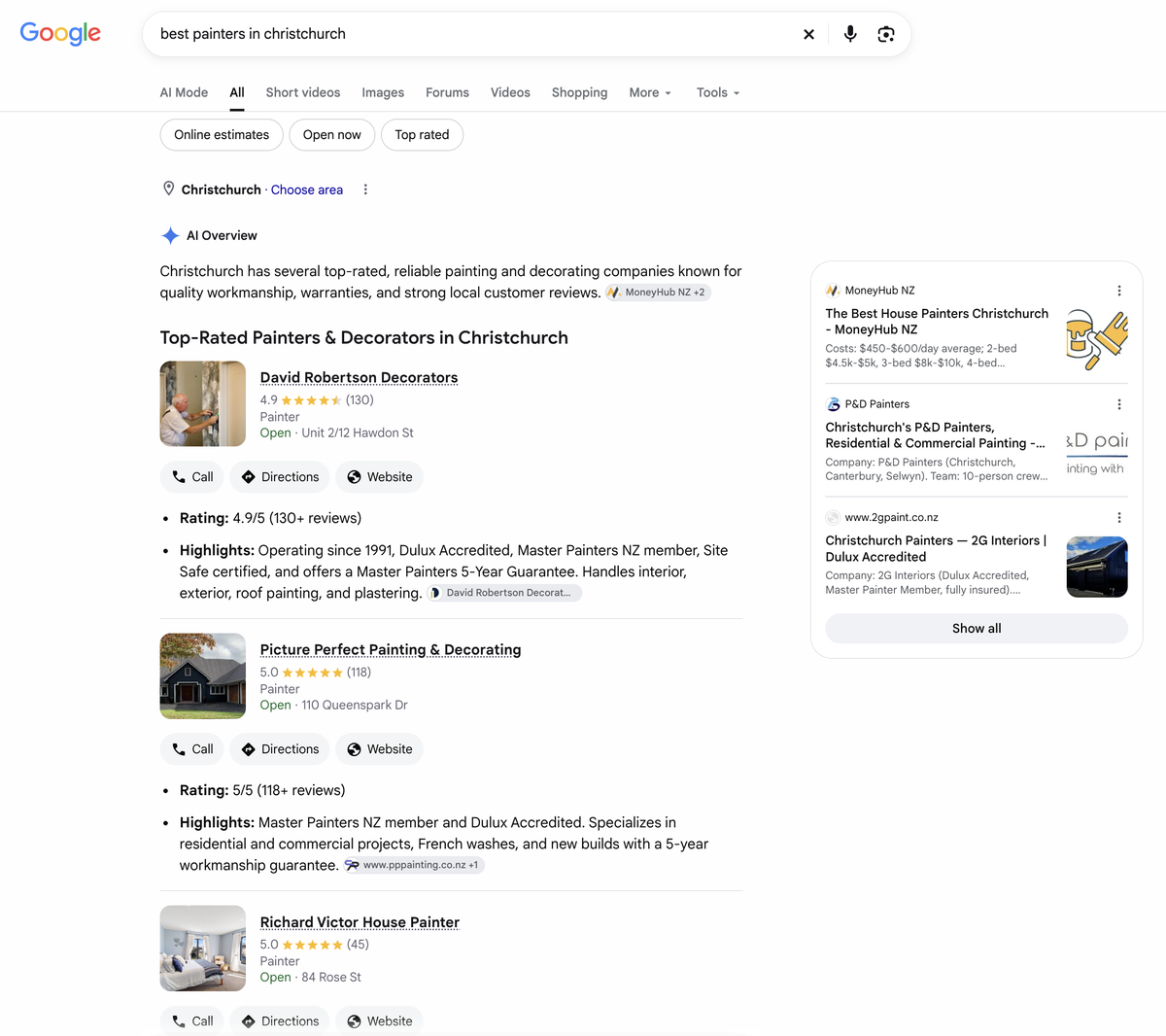
The pattern is the same in both: reviews, clear service information and visible credentials decide who gets named. (Google search, Christchurch, November 2026.)
What we recommended
- Keep the search ads. They were bringing the right people. Cutting them would have fixed nothing.
- Make the website prove trust quickly. Real people, real projects, reviews, and a clear page for each type of job.
- Build visibility that lasts. Reviews, content and an active Google Business Profile, so the business relies less on paid ads over time.
None of this is a clever new campaign. It’s making sure the people the ads bring in find a reason to get in touch.
What a good service page includes
| Section | What to show |
|---|---|
| A clear headline | The job, in the words customers search for |
| Who does the work | Names and faces of the people involved |
| How it works | The steps from first call to finished job |
| Real examples | Photos of finished projects, before and after |
| What it costs | A guide or a range, or what affects the price |
| What customers say | Two or three reviews about this kind of job |
| The next step | One clear, low-pressure call to action |
We added “what it costs” for a reason: in our search research for this business, searches that mentioned “cost” were among the few still growing. People want a sense of price before they pick up the phone.
Try this on your website
- Show your homepage to someone who doesn’t know you. Can they say who you are and why to trust you within 10 seconds?
- Count the real photos of your team and your work. Are there more stock images than real ones?
- Pick your three main services. Does each have its own page?
- Check your Google Business Profile. When did you last add photos, or reply to a review?
- Click your own ad. Does the page it lands on match what the ad promised?
Trust first, clicks second
We’re a Christchurch agency working with businesses across New Zealand, many in trades and construction. When the ads are working but the phone isn’t ringing, we look at the whole path, from the first click to the first call. If that sounds familiar, talk to us about your website or your digital marketing.
FAQ
What is conversion rate optimisation? Conversion rate optimisation (CRO) means improving how many website visitors take the action you want, such as calling, booking or filling in a form. It’s about making the most of the traffic you already have, rather than paying for more.
What’s an average website conversion rate? It varies widely by industry, price point and where the traffic comes from, so a general average isn’t very useful. A better benchmark is your own: track your rate over time, and compare traffic sources against each other.
Do Google reviews really affect enquiries? For local services, yes. Reviews appear in Google Maps and local results before someone visits your website, and they’re often the first proof of quality a customer sees. Recent reviews with photos and owner replies carry the most weight.