Enquiries have changed. Maybe there are fewer of them. Maybe they’re for different jobs than they used to be. The first instinct is to look at the ads: has the budget dropped, has a competitor moved in, do the ads need a refresh?
Those are fair questions. But before we touch a campaign, we ask a bigger one. Has the market itself moved?
One of the best places to find out is free, current and already sitting in Google: what people are searching for, and how that’s changing. This is how we use Google search trends to read a market before spending a dollar on advertising.
In short
- When enquiries change, check the market before you change the ads.
- Google search trends show what customers want right now, in their own words.
- Compare year on year, not month to month, and break demand down by service.
- Two cities in the same country can need two different marketing plans.
Why it matters
Customers’ needs shift over time. Costs go up and people put off big purchases. Products age, so replacing them turns into repairing them. A business can be running perfectly good ads and still see results slip, simply because they’re aimed at last year’s customer.
Tweaking the campaigns won’t fix that. Spending more can make it worse, because you pay to reach people who no longer want what you’re offering. Reading the market first means the money goes where demand actually is.
The businesses behind this article
This article draws on research we did for two clients in different industries:
- A home services business working across Auckland and Christchurch. It wanted to know where to focus its marketing for the year ahead.
- A Christchurch construction business known for large projects. It wanted to understand what local customers were looking for now.
In both cases we started with the same tool: search data.
How we use Google search trends to read a market
Every day, people type exactly what they need into Google. They don’t polish it for a survey or tell you what you want to hear. They just search. That makes search data one of the most honest pieces of market research a business can get, and most of it is free through Google Trends and Google’s Keyword Planner.
We worked through three questions.
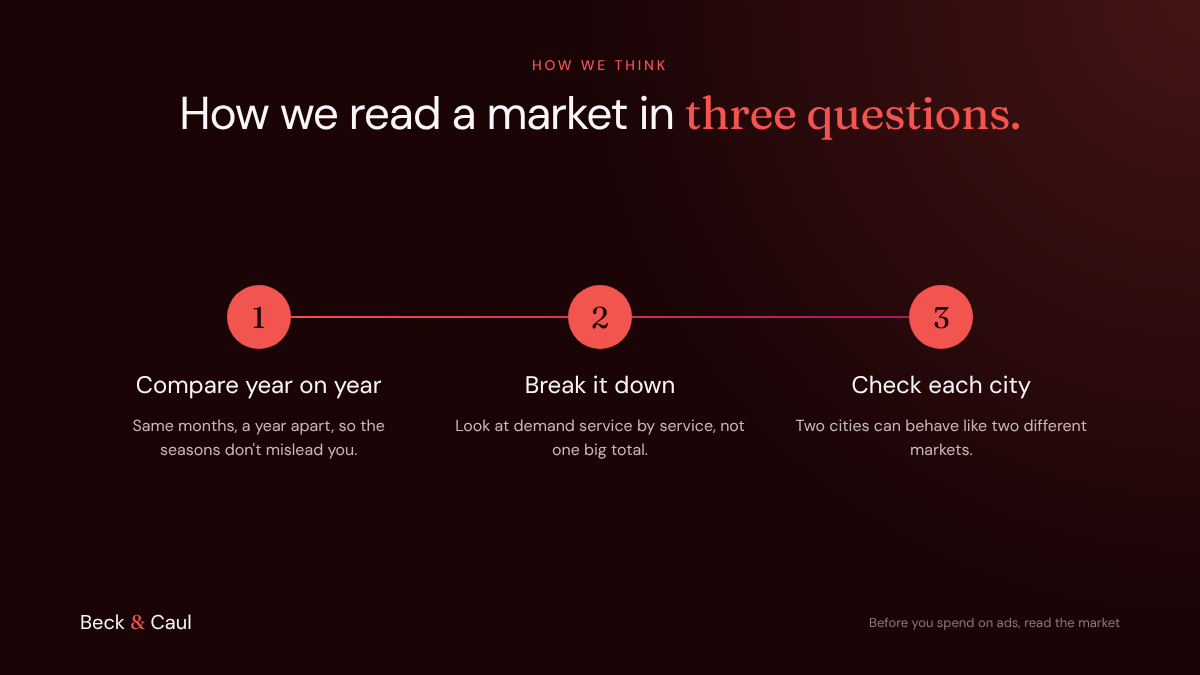
1. What are customers searching for now, compared with last year?
One month of data tells you very little. Searches rise and fall with the seasons, with the news, even with the weather. So we compared each search category with the same period a year earlier.
We also broke the market into groups rather than looking at one total. For the home services business, that meant separating searches for new products and installation from searches for repairs, replacement parts and “near me” services. For the construction business, it meant separating whole-house projects from single rooms, and looking at searches that mentioned cost.
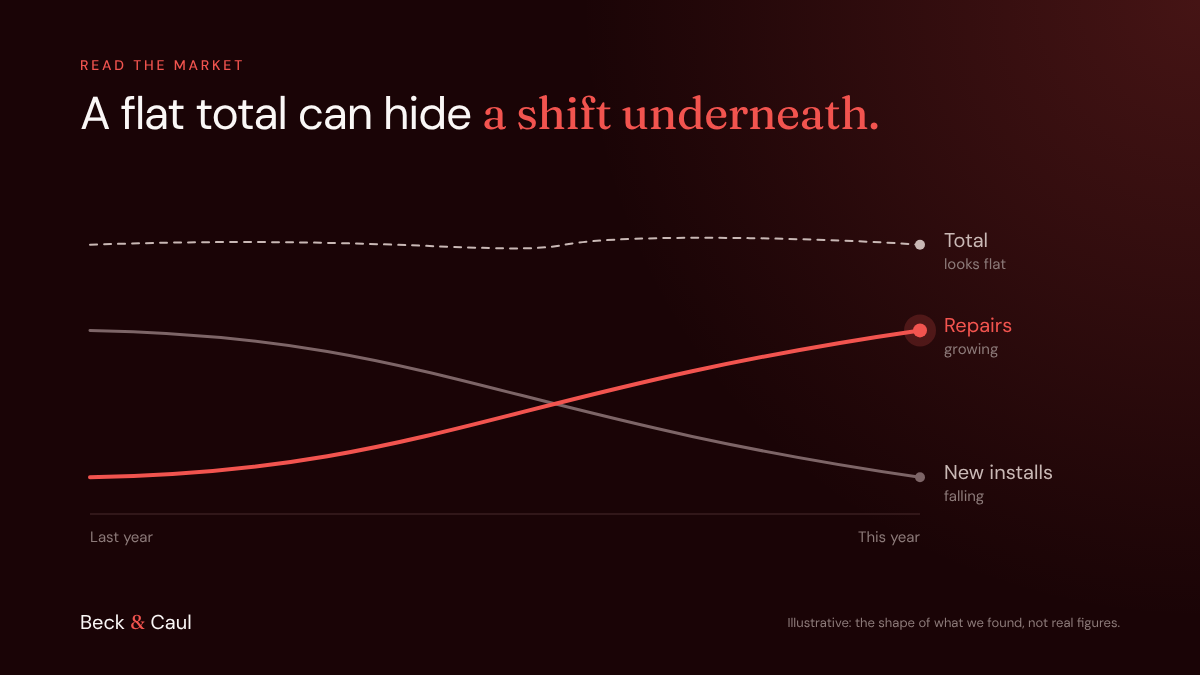
A flat total can hide one group growing while another shrinks. That’s exactly what we found.
2. Has demand moved between services?
In both businesses, yes.
Home services: searches for new products and installation were falling. Searches for repairs, and for parts that wear out with age, were growing. Many homes already have the product; it’s just getting older. Fewer people were buying new, and more needed theirs fixed. Repair work is also steadier, year-round revenue.
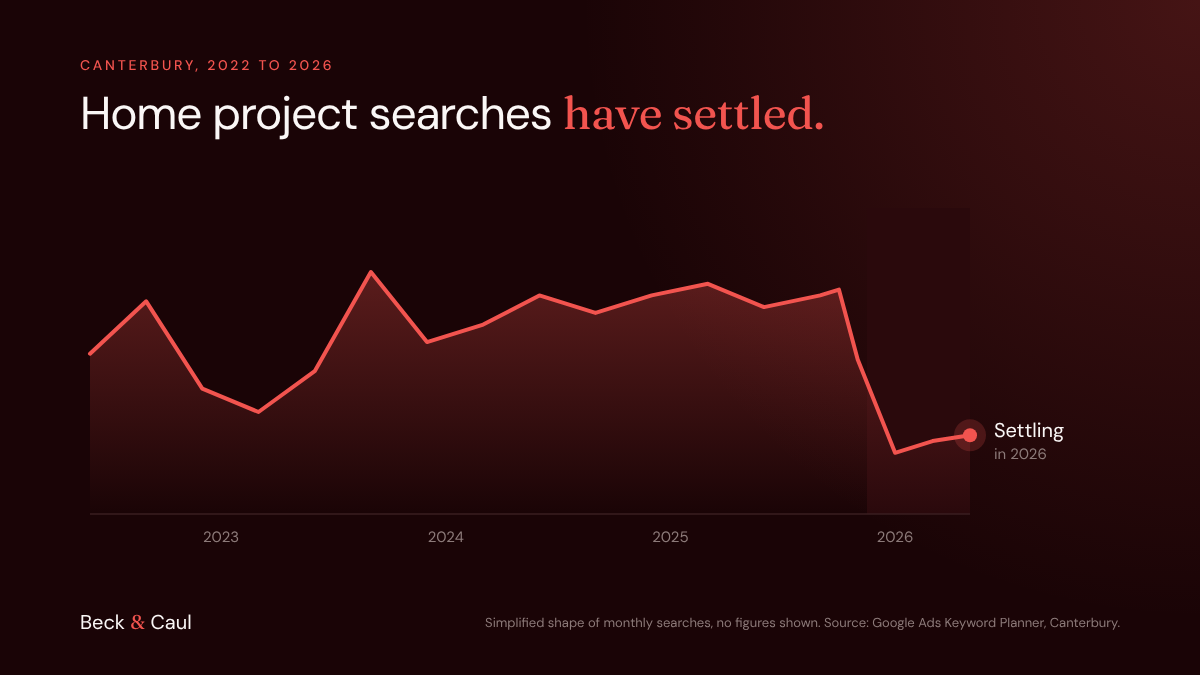
Construction: overall demand had settled after busier years. Within that, interest had moved towards specific rooms, mainly kitchens and bathrooms. Searches that included the word “cost” were among the few still growing. People were still planning projects, just thinking smaller and checking prices earlier.
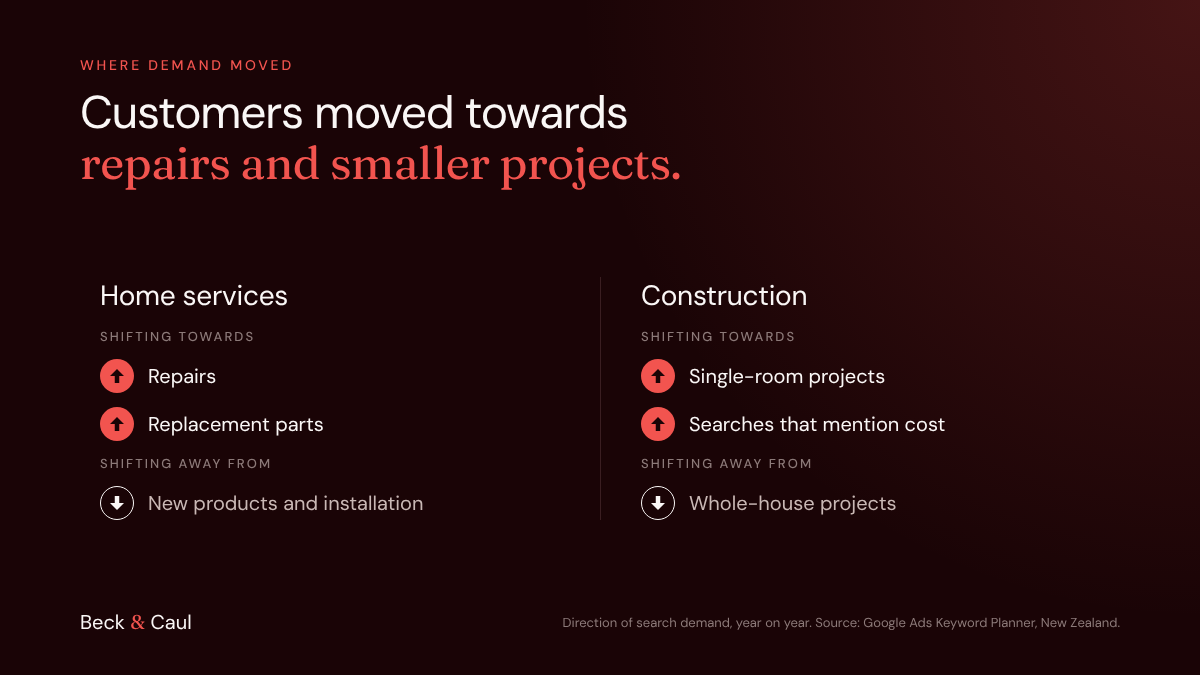
By the numbers: in the home services market, repair-related searches grew by about half in a year, while general searches for the product fell by about a third. Same customers, very different needs.
Source: Google Ads Keyword Planner, New Zealand, 2025 vs 2024.
3. Do Auckland and Christchurch behave the same way?
No, and this is where search data earns its keep.
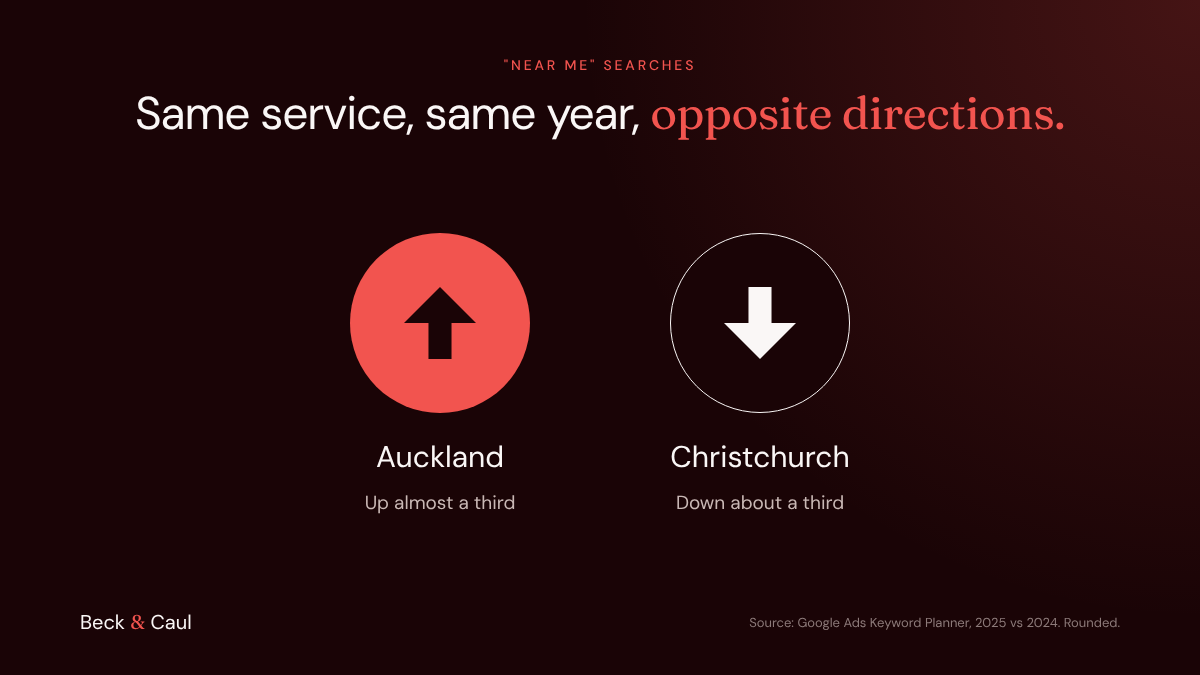
In Auckland, repair demand was high, but so was competition. Many businesses were bidding on the same searches, which pushes up the cost of each click. More Aucklanders were also adding “near me” to their searches. That’s a sign they want speed and convenience above all.
In Christchurch, there were fewer advertisers, and the business already showed up for most relevant searches. “Near me” searches were falling. Christchurch customers seemed to be taking more time to compare who they could trust.
By the numbers: “near me” searches for the same service rose by almost a third in Auckland, and fell by about a third in Christchurch, over the same year.
Source: Google Ads Keyword Planner, 2025 vs 2024.
It’s not just how much people search. The words they use change from region to region too. Here’s a simple example from Google Trends, comparing two ways of looking for the same help: “roofers” and “roof repair”.
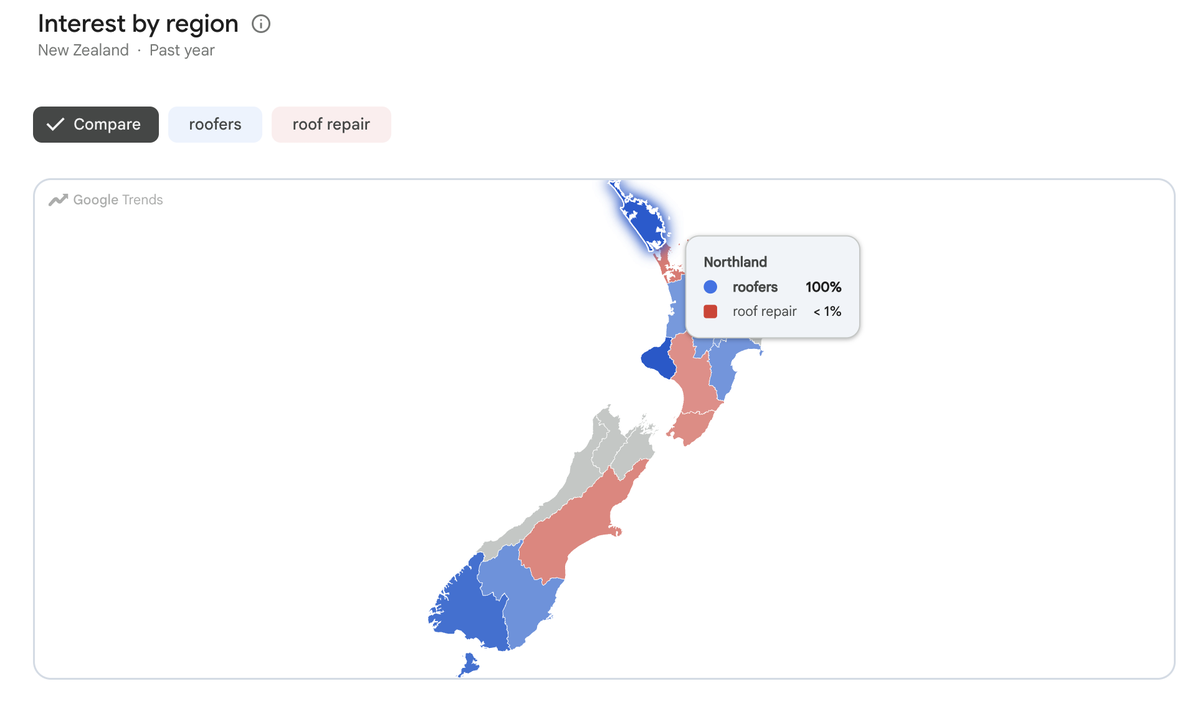
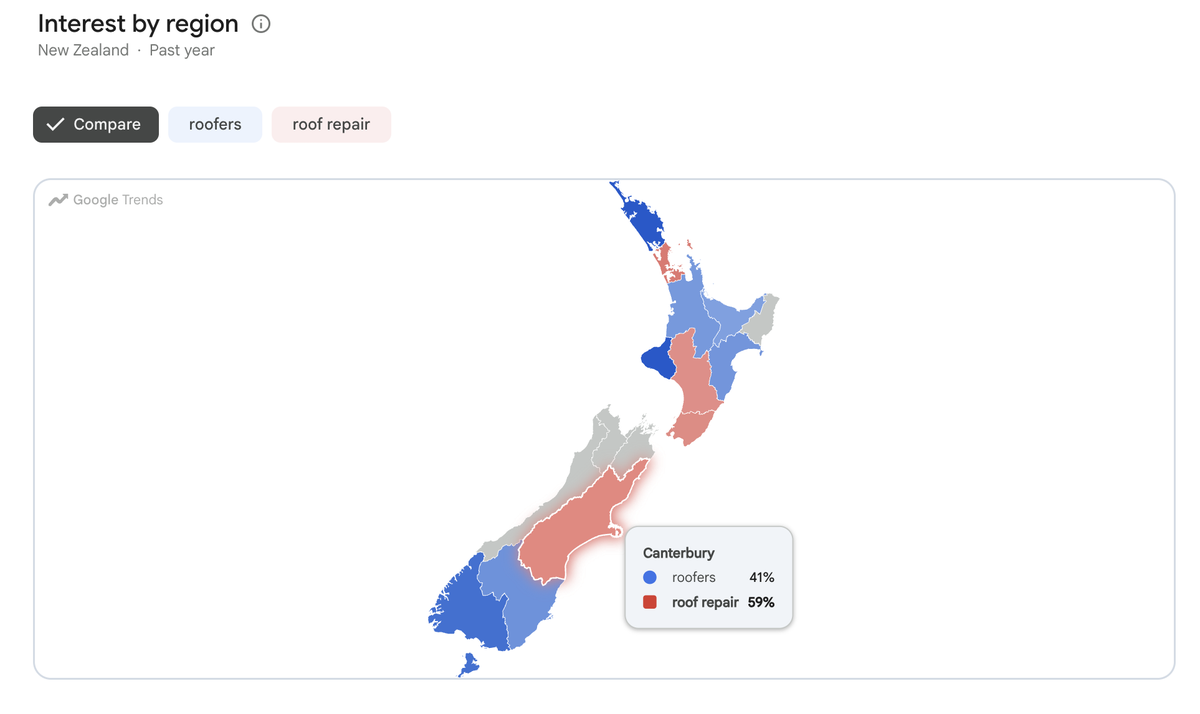
Same service, same country, different words. An ad or a web page written around the wrong word can miss the people it’s meant for. That’s why we check the local language of search, region by region, before writing a single ad.
Same business, same service, two very different markets.
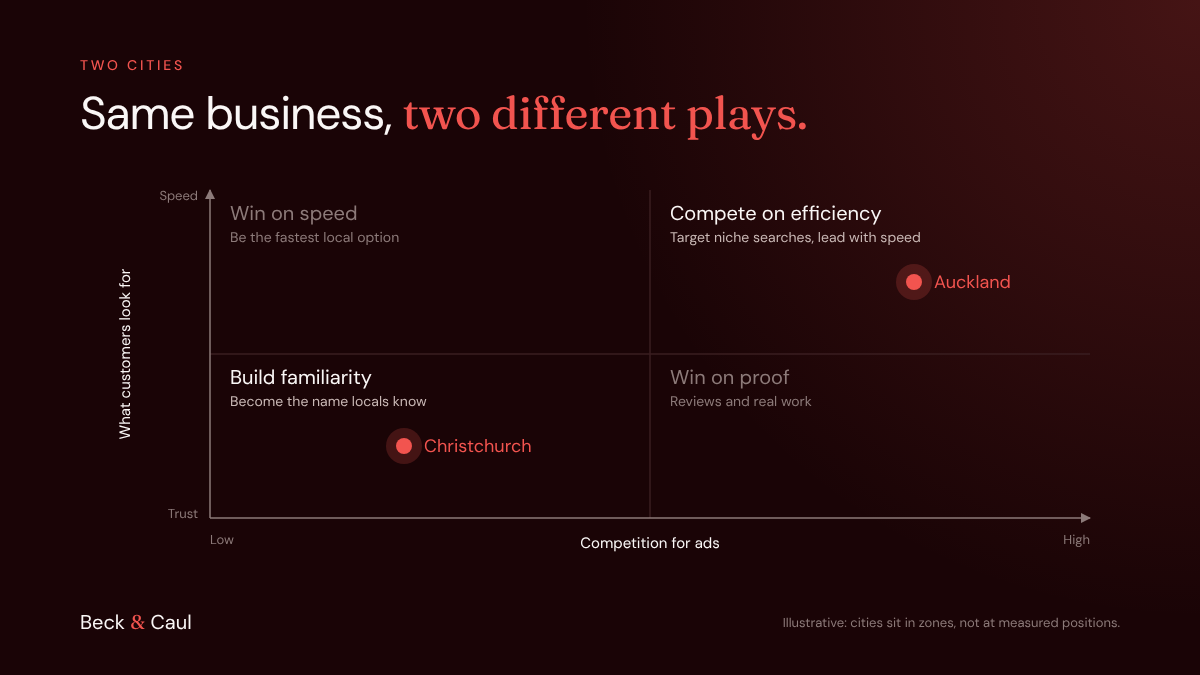
Auckland’s crowded, speed-driven market calls for efficiency; Christchurch’s quieter, reputation-driven market rewards familiarity.
What we recommended, and what we didn’t
For the home services business, we recommended following the demand: put repairs and replacement parts at the centre of the marketing, because that’s where customers were heading. Then give each city its own job:
- Auckland: compete on efficiency. Rather than simply raising the budget to keep up in a crowded auction, target specific repair searches. Lead with fast, local response, and make sure the website turns visits into bookings.
- Christchurch: build familiarity. Use the quieter market to become the name locals know and trust. Put real people, reviews and expertise front and centre.
For the construction business, we recommended giving cautious customers an easier first step: clear pages for the single-room projects people were searching for, with what’s involved and how the process works.
Just as important is what we didn’t recommend. We didn’t tell either business to drop its core work. The construction business’s large projects are still its strength, and a good experience on a smaller job is one of the best ways to win the bigger one later. Following demand means adjusting where you lead, not abandoning what you’re good at.
We were also clear about the limits. Keyword tools give rounded estimates, not exact counts. So we looked for clear patterns across many searches, not precise numbers.
Try this on your business
You can do a basic version of this in ten minutes. Open Google Trends, type in your main service, set the location to New Zealand or your region, and compare the last 12 months with the year before. Then ask yourself:
A note on the tools. Google Trends is free for anyone, but it only shows broad trends, not real numbers. For the detail, we use Google Ads Keyword Planner: monthly search volumes, year-on-year changes and how much competition each search has.
- Are the services you advertise most the ones people are searching for most?
- Has demand moved between new purchases, repairs, upgrades or smaller projects?
- Do your customers in different cities or regions behave the same way, or are you treating them as one market?
- When enquiries last changed, did you check the market before you changed the ads?
If any answer surprises you, that’s worth a closer look.
Market first, campaigns second
We’re a Christchurch agency working with businesses across New Zealand. Whether we’re running ads or building a website, we start the same way: by understanding what’s happening in your market before deciding where the money goes. If you’d like a second opinion on where demand is heading for your business, talk to us about digital marketing.
FAQ
Can I use Google Trends for market research? Yes. Google Trends shows how interest in a search term changes over time and by region, so it’s a quick way to see whether demand is rising or falling. It shows relative interest rather than exact numbers, so it’s best for spotting direction. Keyword Planner gives estimated monthly search volumes if you need a sense of scale.
What’s the difference between Google Trends and Keyword Planner? Google Trends compares interest over time on a scale, which makes it good for seasonality and shifts. Keyword Planner estimates how many searches a term gets each month and what advertisers pay for it. We use both: Trends for direction, Keyword Planner for size and competition.
How often should a small business review its market? A quick check every quarter is enough for most businesses, plus a deeper year-on-year look when you plan your marketing for the year ahead. Check sooner if enquiries change suddenly, before you change your ads.