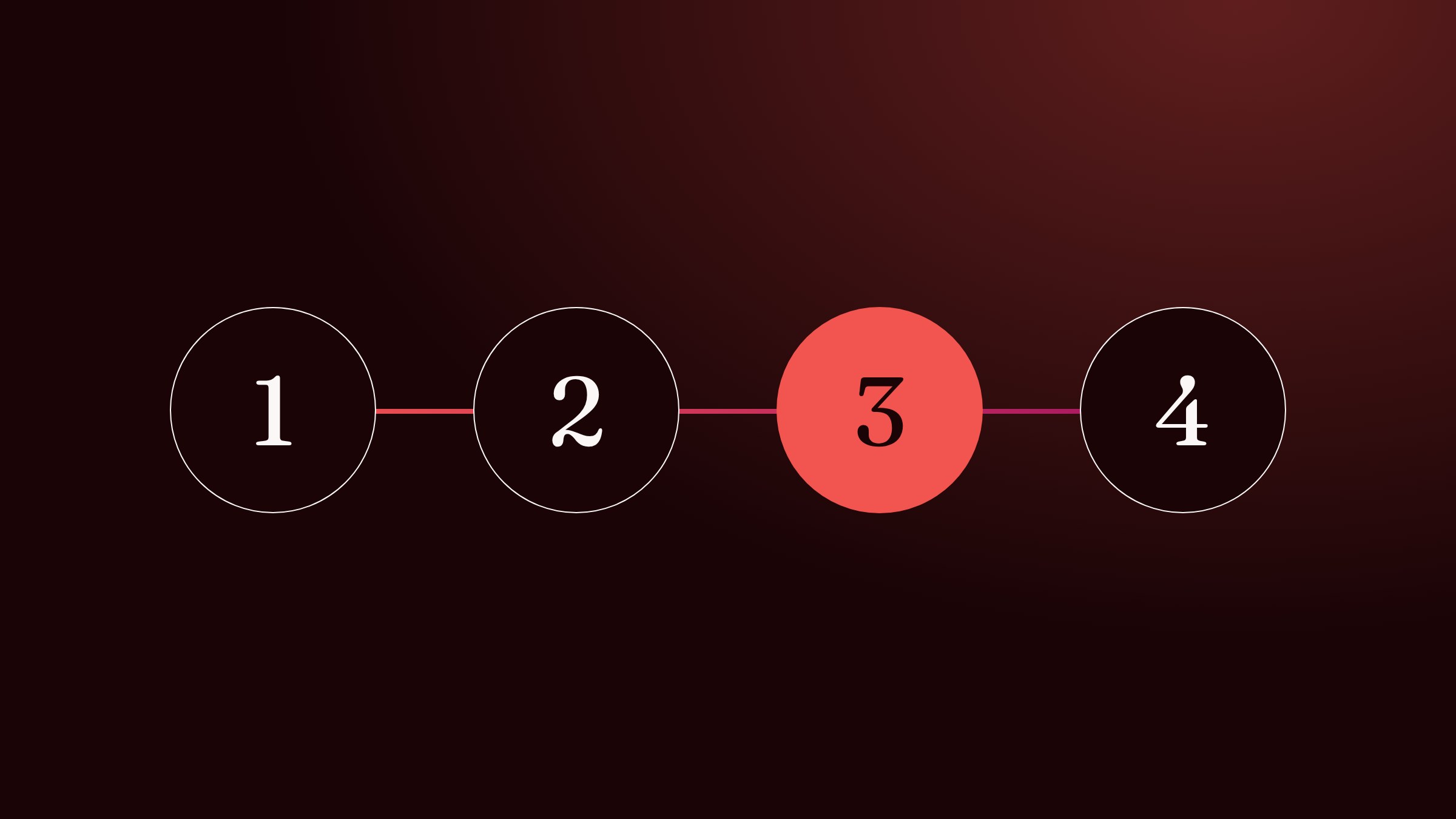
Your ads are bringing people in. Your website is capturing interest. Sales are coming through. On paper, everything works.
But look closer and most of the people who showed real interest never come back. They raised their hand, then heard little from you while they made up their minds. That gap between interest and purchase is the missing middle, and for businesses where customers take weeks to decide, it’s often the biggest opportunity in the whole marketing plan.
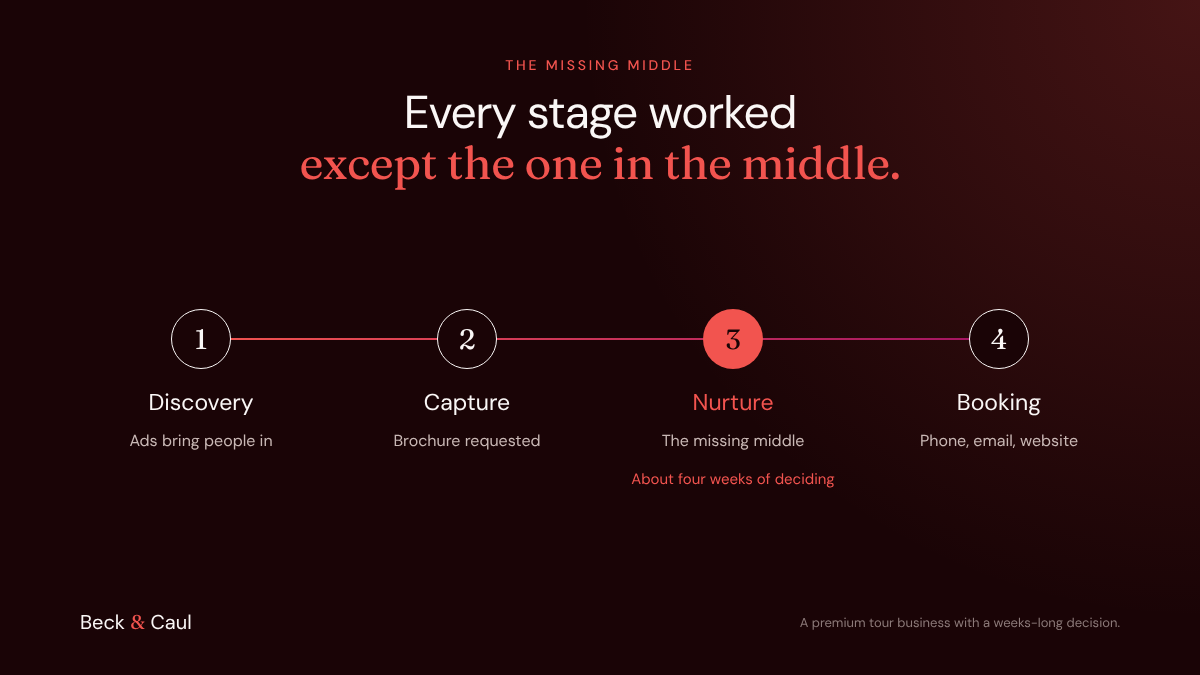
The tool we use to find it is customer journey mapping: following the path from first interest to final sale, step by step, and checking what the customer hears from you at each stage.
In short
- Find the early action that predicts a sale, and how long it takes to turn into one.
- Check what your channel reports really measure before trusting them.
- Most warm leads are lost in the weeks of deciding, not at the first click.
- Fill that gap with timely, tailored follow-up: email, trust-building content and retargeting.
The business: premium tours, considered decisions
A New Zealand tour operator offering premium guided tours asked us to help shape its next six months of marketing. Many of its travellers are in their later years, and a tour is a significant purchase, both in money and in trust.
To find the opportunity, we stopped looking at each channel on its own and mapped the whole journey from first interest to booking.
Step 1: how does this customer decide?
We started with published travel research to understand the shape of the decision.
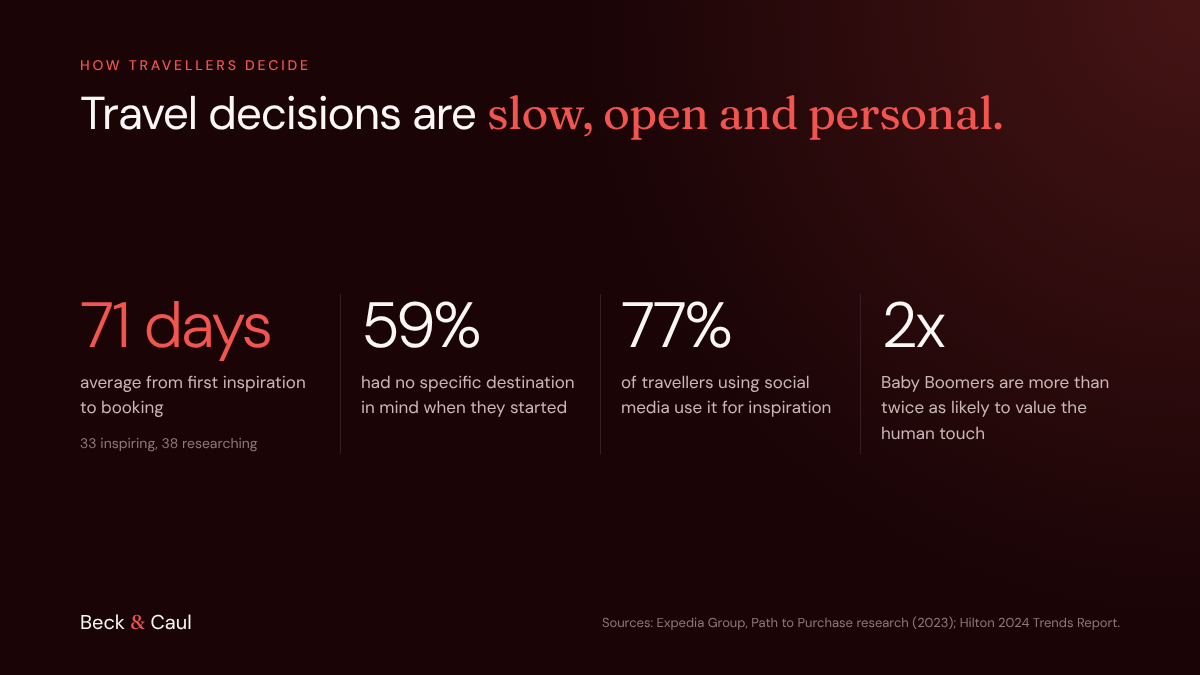
Sources: Expedia Group, travellers’ booking journeys; Expedia Group, Path to Purchase research; Hilton 2024 Trends Report.
It was clear this is a slow, trust-led decision. People take weeks to move from first inspiration to booking. Many haven’t even chosen a destination when they start looking. And older travellers place more weight on personal service than younger ones. That gave us a hypothesis to test in the client’s own data.
Step 2: which early action predicts a sale?
On the tour operator’s website, the clearest sign of serious interest was a brochure request. Someone who downloads a brochure has a trip in mind and wants the details.
So we compared brochure requests each month with bookings each month. Lined up month against month, the link was loose. But when we shifted bookings back by about a month, a clear pattern appeared: months with more brochure requests were usually followed by months with more bookings.
That told us two useful things:
- The brochure request is a leading indicator. Watching it gives an early read on where bookings are heading next month.
- There’s a decision window of around four weeks between a request and a booking. That’s the window to work in.
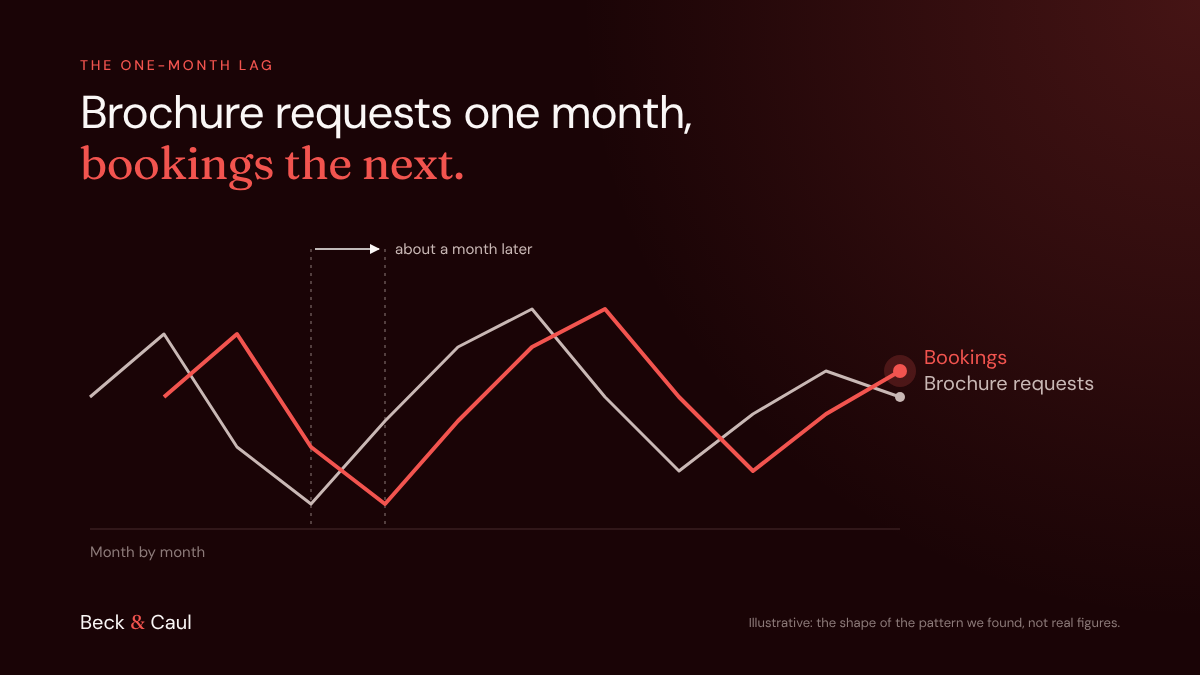
We were careful not to oversell this. It was based on about a year of monthly figures, so it’s a strong signal worth acting on, not a law. Some months didn’t follow the pattern, and we said so.
Step 3: what do the channel numbers really mean?
Next we looked at which channels drove brochure requests and bookings. Two details changed how the numbers should be read.
“Direct” bookings weren’t really a channel. A large share of bookings showed up as direct traffic. When we dug in, many of these were office staff entering phone and email bookings on the website. Those customers had found the business somewhere else first. Taken at face value, that number would have hidden where they came from.
The channel that brings people in isn’t always the one that gets the credit. Google’s broad campaigns brought in a large share of first visits and brochure requests. Organic search had the best rate of turning visits into bookings. Each channel had a different job, at a different stage.
| Channel | Its real job in the journey | What the standard report hid |
|---|---|---|
| Google broad campaigns | Discovery: first visits and brochure requests | Its role early on, because it rarely gets the final click |
| Organic search | Closing: the highest rate of visits turning into bookings | Little, but it depends on the work done earlier |
| “Direct” | Mostly staff logging phone and email bookings | That these customers came from other channels first |
| Follow-up with people who already showed interest | That it wasn’t yet timed to the decision window | |
| Social media ads | Earlier, standalone tests | That they weren’t connected to the rest of the journey |
Step 4: customer journey mapping shows the gap
Putting it all together on one customer journey map made the problem plain. Most people who requested a brochure never went on to book: only around one in twenty did. They had raised their hand, then heard little that was tailored to them during the weeks they were deciding.
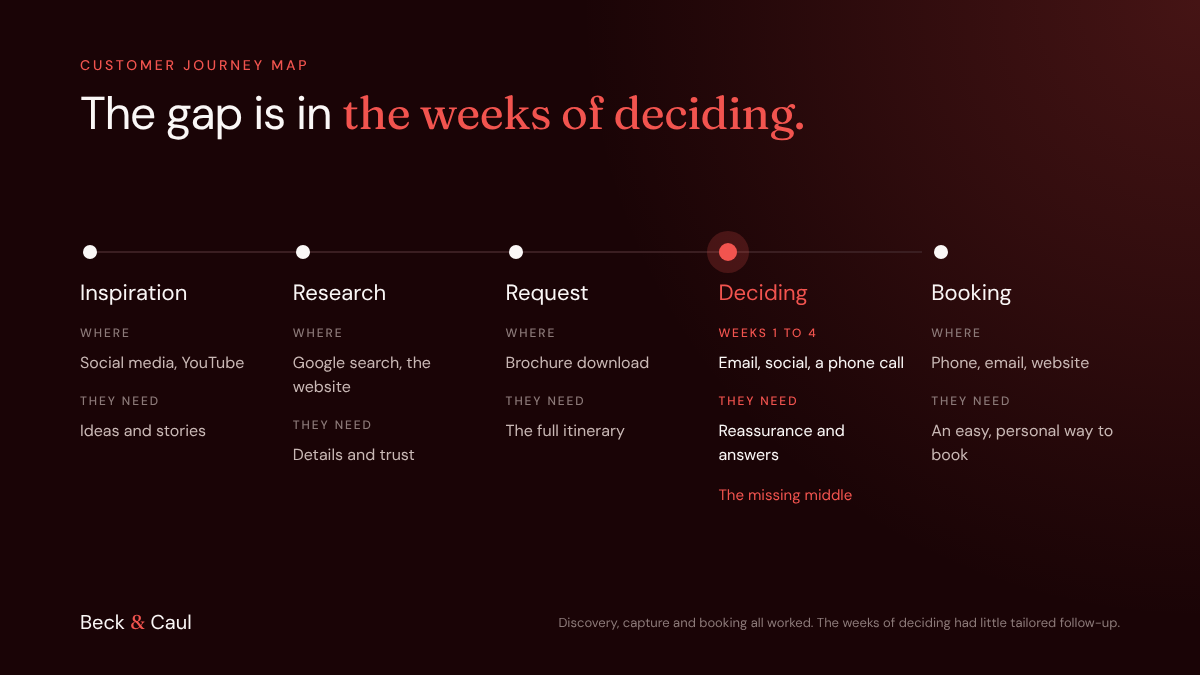
Discovery worked. Capturing interest worked. Booking worked. What was missing was the middle: staying in touch with interested people while they made up their minds.
That’s also the lowest-risk place to grow. These people have already shown interest. They don’t need to be found again, just helped to decide.
What we recommended
We proposed three workstreams for the six months ahead, all aimed at the missing middle.
- Email: lead nurturing timed to the decision. Sort the database by past travel and by which brochure someone requested, then set up automated emails for the weeks after a request.
- Creative: a “why choose us” library. Tour leader profiles, behind-the-scenes footage and real traveller stories, for an audience that values people over polish.
- Channels: one connected journey. Google captures active searches. Social media and YouTube inspire early-stage travellers and stay in front of recent website visitors through retargeting ads.
What a nurture sequence could look like
Here’s an example of lead nurturing emails mapped to a four-week decision window. The detail changes by business; the principle is to answer the next question before the customer has to ask it.
| When | Why it helps | |
|---|---|---|
| Straight away | The brochure, with a personal thank you from the team | Confirms the request and shows there are real people behind it |
| Week 1 | Meet the people who’ll be with you | Puts a human face on the trip |
| Week 2 | Stories from past travellers | Proof from people like them |
| Week 3 | The questions people usually ask | Clears up doubts before they become reasons to wait |
| Week 4 | A personal invitation to talk, or to book | Makes the next step easy and human |
Retargeting ads run alongside, so the business stays visible on social media and YouTube while the emails do their work.
Try this on your sales journey
- What’s the first action that shows a customer is serious: a download, a quote request or a call?
- How long does it usually take from that action to a sale?
- What does a prospect hear from you during that time? Is it tailored, or generic?
- Do you know which sales were logged by staff rather than made online?
- Do your channels work together as one journey, or each on its own?
Help them decide, not just find you
We’re a Christchurch agency working with businesses across New Zealand, including many where customers take their time to decide. We map the whole journey, from first interest to final sale, and find where warm leads go quiet. If that sounds familiar, talk to us about your digital marketing.
FAQ
What is customer journey mapping? It’s a way of laying out every step a customer takes from first hearing about you to buying, along with what they need and what they hear from you at each stage. It shows where people drop out, and why.
What are the stages of customer journey mapping? Most maps follow a similar path: inspiration or awareness, research, a first sign of interest (like an enquiry or download), deciding, and buying. Many businesses add after-sale stages too, such as repeat purchases and referrals.
What is lead nurturing? Lead nurturing means staying in helpful contact with people who’ve shown interest but aren’t ready to buy yet, usually through timed emails, useful content and retargeting ads, until they’re ready to decide.